The Jobs We Sometimes Talk You Out Of: When Bespoke Isn't the Answer
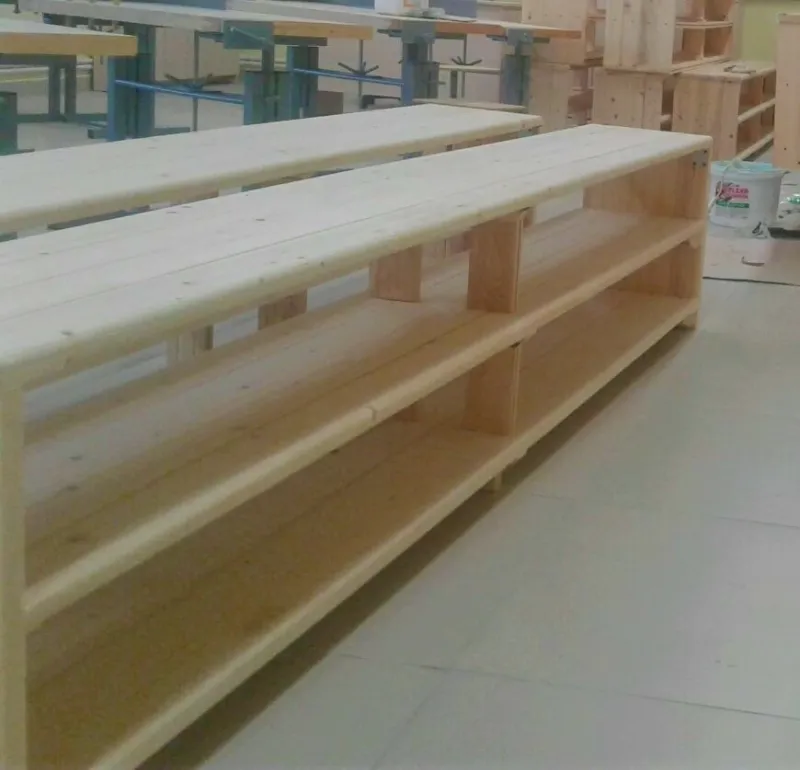
Photo: Oleg Bor, CC BY-SA 4.0, via Wikimedia Commons
We make fitted furniture for a living, so you might expect us to recommend it for everything. We do not.
Over the years we have quoted for jobs that we knew, standing in the room, were the wrong answer. Sometimes we said so and lost the work. Sometimes we said so and won it anyway, because the customer had a reason we had not considered. But the conversation is worth having, because bespoke joinery is expensive, permanent and made specifically for one set of walls — and that makes it the wrong tool more often than the trade likes to admit.
Here are the five situations where we would genuinely suggest you spend your money elsewhere.
1. The room is a plain rectangle and stays one
Bespoke earns its keep on awkward geometry: chimney breasts, alcoves either side of a fireplace, sloping ceilings, walls that are 40mm out over two metres, a corner that is not square. That is where a made-to-measure carcass does something a flat-pack never will.
If your space is true, square and standard, though, you are largely paying for millimetres you do not need. A decent modular range, assembled carefully and scribed in by someone competent, will do the job for a fraction of the cost. There is a middle path too — standard carcasses with a bespoke frame and doors — that gets you the look without the full commission.
2. The budget only balances if something important gets cut
Nobody enjoys talking about money, but a quote is a set of compromises written down. When a budget is tight, the pressure lands on the parts you cannot see: 15mm board instead of 18mm, chipboard instead of moisture-resistant MDF, unbranded runners, no scribe fillers, a one-day install instead of three.
We would far rather build one alcove properly than three walls badly. If the number does not work, reduce the scope — not the specification. Fitted furniture that sags, sticks or delaminates after four years has cost you more than the money you saved.
3. You are moving in the next year or two
Bespoke joinery is made for the room, not for you in general. It does not come with you. On a typical UK sale it adds a modest amount of appeal to a period property and very little to the asking price, particularly in a market where buyers are already stretching.
If a move is on the horizon, buy freestanding, buy secondhand, or buy modular and take it with you. The exception is when you are fitting out a house to sell and the alcoves are genuinely odd — but go in knowing that is a marketing decision, not an investment.
4. The building has an unresolved problem
This is the one that worries us most. We have been asked to build wardrobes over walls with rising damp, over floors that bounce, over plaster that is blowing, and in front of a chimney breast that turned out to be leaking at the flaunching.
Joinery is very good at hiding things. That is not always a virtue. If a wall is wet, a fitted wardrobe will hold that moisture against your clothes and your timber until someone notices, usually a year later, usually with a smell. Sort the pointing, the gutters, the drainage, the ventilation and the structure first. Then fit.
Listed buildings and conservation areas deserve their own pause, too — consent, fixing methods and irreversible alterations are all conversations to have before the first board is cut.
5. You do not yet know what you are storing
A brief of 'some shelves and a rail' is not a brief. We can build it, and it will look lovely, and in eighteen months you will be buying plastic boxes to fill the gaps.
The best fitted furniture comes from a customer who can say: this many long coats, this many suits, these boots are 40cm tall, the ironing board lives here, the suitcase goes on top. If you cannot say that yet, live with a temporary rail and a few crates for three months and watch how you actually use the room. It is much cheaper to learn that now than to rebuild around it later.
How to tell which side of the line you are on
A short version of the questions we ask ourselves before quoting:
- Is the geometry difficult? If yes, bespoke gains you something real.
- Is the budget comfortable, or a stretch? If it is a stretch, reduce the scope.
- Are you staying put for five years or more? If not, think portable.
- Is the building sound? If not, fix first.
- Can you describe what goes in it, item by item? If not, wait.
- Is the decision yours? Committees and compromises rarely produce a good joinery brief.
The view from the bench
A joinery firm that never says no is usually a firm that says yes too easily. Turning down work is uncomfortable, and we do not do it for the pleasure of it. We do it because a bad fit is expensive for everyone — for you, for the fitter who has to make it work, and for a reputation built one room at a time.
If you are unsure which side of the line your project sits on, that is a perfectly good reason to ask. A half-hour conversation and a sketch are much cheaper than a commission you regret.