When the Workshop Comes to You: Living Through a Fitted Furniture Installation

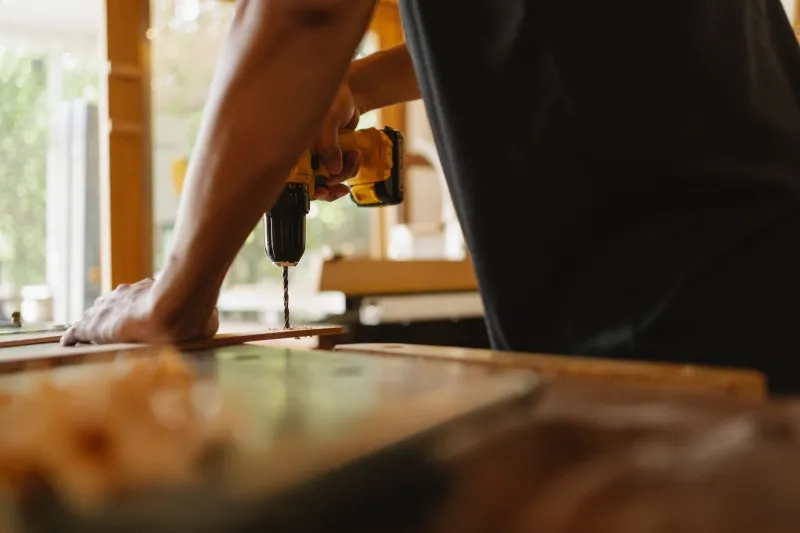
Photo: joiner installing fitted furniture in UK home with dust sheets protecting floor, via www.atlantahousing.org
Most people picture the finished thing: the wardrobe doors sitting flush, the alcove shelves holding books rather than hiding cables, the new larder stocked and calm. What they do not picture is the week before that, when the hallway smells of MDF and the router has just started up while they are on a work call. That is not a reason to avoid fitted furniture. It is just a reason to know what you are buying into.
An installation is a small building site that happens to be inside your house. The best joinery teams are not the ones who pretend otherwise. They are the ones who plan the mess, contain it, and sweep up after themselves.
Before the first board comes in
The installation really begins with protection, not power tools. In a typical UK home, that means hardboard or heavy-duty paper down the main route, a stair runner or carpet protector fixed properly rather than flapping about, and masking tape along skirting boards and door frames where trolleys and timber will pass. If there is a tight hallway or a Victorian staircase with a wobbly bannister, that gets attention too.
It also means a conversation about access. Where will the van park? Is there a permit situation? Which door is easiest to bring eight-by-four sheets through? Are there pets that will make a run for the front garden every time the door opens? These are not fussy details. They are the difference between a smooth start and an hour of shuffling things around while the clock runs.
A good team will also ask what you need to keep working. If the kitchen is being fitted, can the kettle and microwave live in the dining room for a few days? If the installation is in the main bedroom, can you sleep elsewhere, or will the team sequence the work so the bed goes back in each evening? None of this is glamorous. All of it matters.
The noise has a rhythm
No one should tell you a fitted furniture installation is quiet. Drills, saws, nail guns and the occasional firm tap with a mallet are all part of it. Routers are the worst offenders — a high-pitched whine that seems to travel through every wall in the house. In an old terrace or a flat with hard floors, it will carry further than you expect.
The saving grace is that the noise is not constant. There are long stretches of measuring, checking, adjusting and fitting, followed by short bursts of loud work. A considerate joiner will warn you before the noisy stage begins, especially if you are working from home or have a baby sleeping upstairs. They will also try to group the loud jobs rather than spreading them across the day.
If you are on calls, tell them. If the school run means the house is empty between certain hours, tell them that too. Most teams would rather know and plan around it than discover halfway through a hinge cut that you are presenting to a client in the next room.
Dust is part of the job — but it can be contained
Wood dust is not a moral failing; it is a by-product. MDF and softwood sanding produce a fine dust that settles on surfaces you did not know were exposed. The answer is not to pretend it will not happen, but to manage it.
On-site extraction on tools helps. So does cutting outside where possible, or in a garage if you have one. Doorways can be sealed with dust sheets or zip-up plastic screens. Windows get opened when the weather allows. Surfaces are wiped rather than dry-brushed, because dry-brushing just moves the dust from one place to another.
Dust sheets are not decoration. They should be laid properly, overlapped, and weighed down so they do not become a trip hazard. Offcuts and packaging should be bagged as the day goes on, not left in a pile for Friday afternoon. If you see a team working without extraction or leaving a trail of sawdust through the hall, you are allowed to ask questions.
Protecting a house that is still a home
One of the strange things about fitted furniture is that it is installed in a house that is still being lived in. The family still needs the stairs, the bathroom, the kettle and somewhere to sit. A good installation plan protects those routes rather than blocking them.
That might mean keeping a clear path to the kitchen while the hallway is out of bounds. It might mean moving a sofa into the middle of the room and covering it. It might mean asking you to empty a wardrobe the night before so the old carcass can come out without a last-minute scramble. Small preparations on your side save a lot of time on theirs.
It also means thinking about who is at home. Children are curious, and a box of chisels is not a toy. Pets are unpredictable, and an open front door is an invitation. A decent team will help you keep both out of the work area, but they cannot do it alone.
The daily sweep and the evening reset
This is the detail that separates a professional installation from a prolonged invasion. At the end of each day, the house should be left liveable. Not showroom-clean, not dust-free, but safe and usable.
That means a sweep through the work area, a hoover over the main route, tools stacked rather than scattered, leads coiled, and waste bagged. It means the kettle is reachable and the stairs are clear. It does not mean every surface has been polished. There will still be a fine film of dust on the landing. There will still be a faint smell of timber and adhesive. That is normal.
If the team is fitting a kitchen, the evening reset matters even more. You need to know where the fridge is, whether the water is back on, and which cupboard is safe to open. Ask before they leave. A quick walk-round at the end of the day is not a nuisance; it is part of the job.
Sequencing around real life
Good joinery teams sequence work around the household, not just around their own timetable. If you work from home, the loudest jobs can be scheduled for the hours when you are least likely to be on a call. If you have a school run, the team can plan around the quiet window. If someone is unwell or a baby is napping, tell them.
There are limits, of course. An installation is not a hotel service, and some jobs are noisy whenever they happen. But most disruption comes from surprises. A team that tells you what is happening next, and when, is easier to live with than one that disappears for two hours and then starts drilling above your desk.
What you can do to make it easier
Clear the room as much as you reasonably can. Empty the wardrobe, take down the pictures on the shared wall, move the fragile things. Agree parking and access in advance. Keep children and pets away from the work area. Offer a cup of tea, but do not feel you have to hover — most joiners work better when they are not being watched like a pot about to boil.
And ask questions. You are paying for the work, and you are allowed to know what is happening. A good team will answer without making you feel like a nuisance.
The dust settles. The doors line up. The house goes back to being a house rather than a workshop. In the meantime, a little planning and a daily sweep make the whole thing far easier to live with.