The Unshowy Cupboard: Fitted Storage for Ironing Boards, Vacuums and the Rest of It

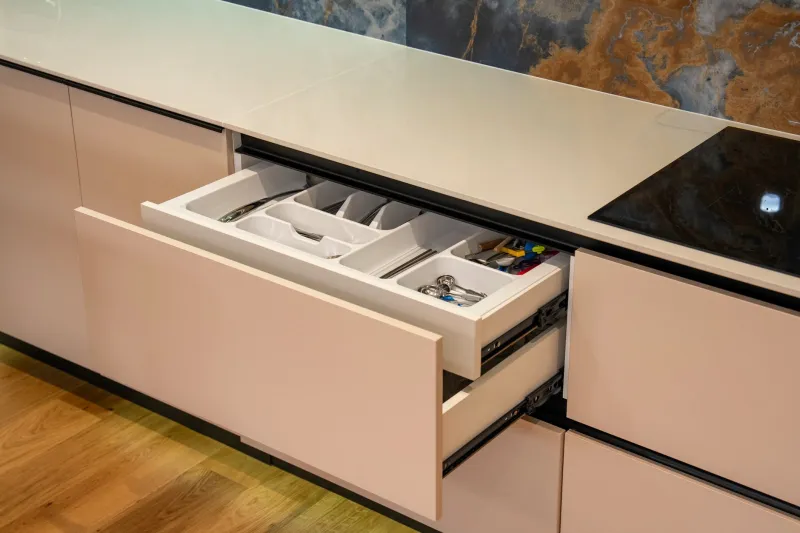
Photo: built-in utility cupboard fitted storage ironing board vacuum UK home interior, via d1ralsognjng37.cloudfront.net
Every house has a cupboard that nobody photographs. It is not the larder with the pretty jars, or the alcove shelving with the carefully spaced books. It is the place where the ironing board leans at an angle, the vacuum cleaner lies on its side, and a step ladder is wedged behind the door. It is unglamorous, slightly annoying, and absolutely central to how the house works.
At MTW Joinery, we build plenty of fitted furniture that gets admired. But the utility storage is often the joinery that earns its keep hardest. A well-planned cupboard for the cleaning kit and the drying rack can take the friction out of ordinary days. A badly planned one becomes a place where things go to be forgotten. The difference is rarely about spending more. It is about measuring the awkward stuff and designing around it properly.
Start with the things that annoy you
Before anyone talks about doors or shelf heights, empty the cupboard. Actually empty it. Then put the ironing board, vacuum, mop, bucket, drying rack, step ladder and cleaning caddy on the floor in front of you. Measure the tallest item, the widest item, and the one that needs the most floor space when you pull it out. Do not design for the vacuum you own if you know you will replace it with a taller model in two years. Leave a little room for real life.
In UK homes, the utility cupboard is often squeezed into a hallway, under the stairs, beside the kitchen, or at the end of a galley run. That makes every millimetre count. But cramming everything into one deep void is not the answer. A 600mm deep cupboard is useful for a vacuum; a 900mm deep cupboard is where things disappear. If the space is deep, plan pull-out trays or a split-level layout so you are not climbing in to reach the back.
Heights, depths and the ironing board slot
The ironing board is the item that causes the most disagreement. It is long, thin and top-heavy. Storing it flat against a wall sounds neat until you need it. Storing it upright in a dedicated slot is usually better. A slot around 350mm wide and 1.5m high will take most domestic boards, but check yours folded. Some boards are wider at the feet and some have a thick cover. A simple timber divider keeps it from falling across the vacuum.
For the vacuum, think about the base and the hose. A full-height slot is fine, but the cleaner needs to sit on a solid shelf or the floor, not on a thin chipboard shelf that sags. If it is a cordless model, plan a socket inside the cupboard for charging. That one detail stops the vacuum living permanently in the hallway. For a corded vacuum, a hook for the cable and a clear space for the hose will save ten minutes of untangling every week.
Step ladders want a narrow vertical bay or a high shelf with a retaining lip. Drying racks are the awkward one: they are wide when open but slim when folded. A deep shelf at waist height or a pair of wall hooks inside the cupboard can work, but check the swing of the door. Nothing is more irritating than a drying rack that has to be removed before the door will shut.
Ventilation is not a luxury
Utility cupboards get damp. Not dramatically damp, but enough. Damp mops, cleaning cloths, wet wellies and the occasional drying rack all put moisture into a small space. If the cupboard is sealed tight, that moisture has nowhere to go. The result is a smell, then mildew on the wall, then a joinery build that starts to suffer.
Ask for ventilation from the start. A simple grille in the door, a gap at the top or a small vent through to a neighbouring space can make a real difference. If the cupboard holds a tumble dryer or a charging vacuum, ventilation matters even more. We often recommend a slatted shelf or an open back section where it does not compromise the wall finish. It is not a glamorous detail. It is the kind of detail that decides whether the cupboard still smells fresh in five years.
Doors: what you will actually open
A utility cupboard has to be easy to open with one hand while you are holding a bucket. That rules out fiddly catches and doors that need to be propped open. Full-height hinged doors are straightforward and give good access, but they need clear floor space in front. Bi-fold doors are useful in tight hallways because they fold back rather than swinging out. Sliding doors save space but can be awkward if the opening is narrow, as you only ever see half the cupboard at once.
If the cupboard is in a hallway, consider a door that matches the surrounding joinery so it disappears. If it is in a utility room or boot room, a simple painted finish is often enough. What matters more than the style is the opening. A door that opens to 90 degrees and stays there is worth more than a beautiful door that fights you every time.
The small choices that stop the slide into chaos
Utility storage fails when it has no internal logic. A single empty cavern becomes a dumping ground because there is no obvious place for anything. Divide it into zones: a tall slot for the ironing board, a floor bay for the vacuum, a shelf for the cleaning caddy, a hook for the dustpan, a high shelf for the step ladder. Label the zones if you need to. It sounds fussy, but it works.
Use adjustable shelves rather than fixed ones where you can. Household kit changes. A shelf that is perfect for the current mop may be useless for the next one. Choose a wipeable finish on the shelf edges and the floor of the cupboard. Cleaning products spill. Wet boots drip. A sealed edge and a simple painted surface are easier to live with than a raw timber shelf that stains.
And leave a little empty space. Not much — UK utility cupboards are rarely generous — but enough that you can pull something out without removing three other things first. That small gap is what separates a working cupboard from a game of household Tetris.
What bespoke buys you here
You do not need bespoke joinery to store a vacuum cleaner. A decent cupboard will do. But bespoke joinery lets you fit the cupboard to the awkward corner, scribe the shelves to the wall, and plan the internal heights around the things you actually own. It also lets you make the cupboard look like part of the room rather than an afterthought. That matters in hallways and kitchens where the utility kit has nowhere else to go.
The best utility storage is the kind you stop noticing. The ironing board goes back without a fight. The vacuum charges out of sight. The step ladder is where you left it. Nobody photographs that cupboard. But in a busy UK home, it is often the one that makes the rest of the house feel calmer.