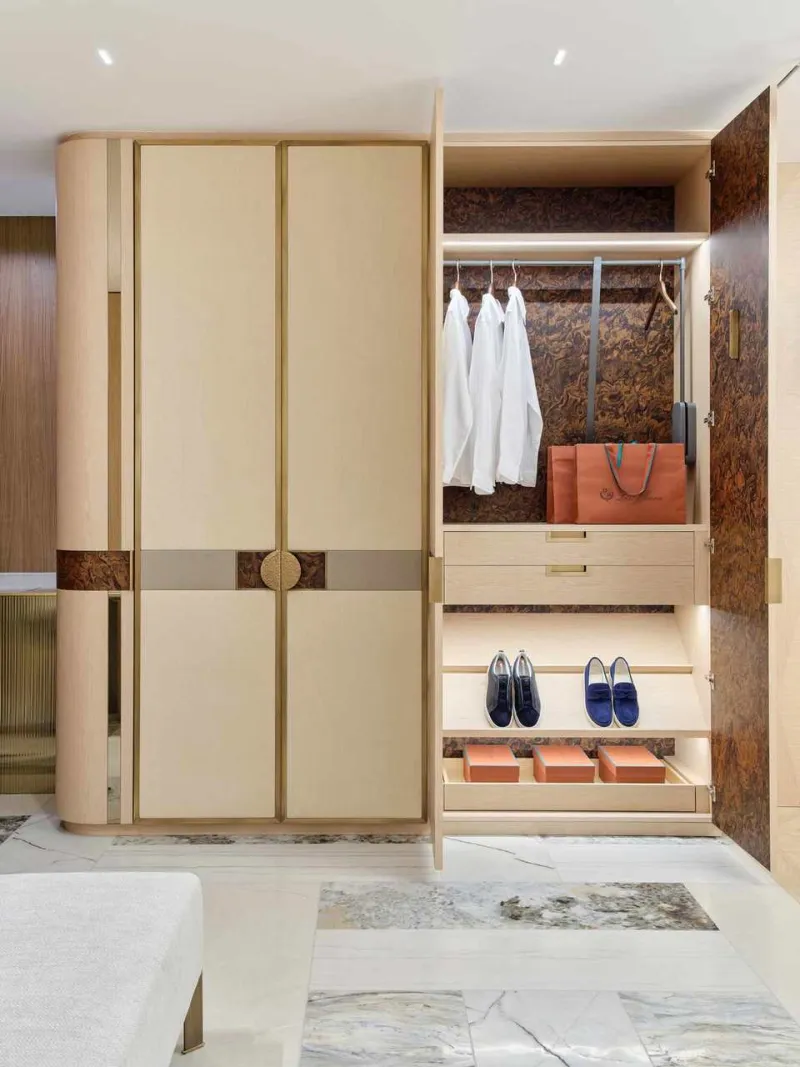
The Grain, the Room and the Budget: Picking Timber That Actually Suits Your House
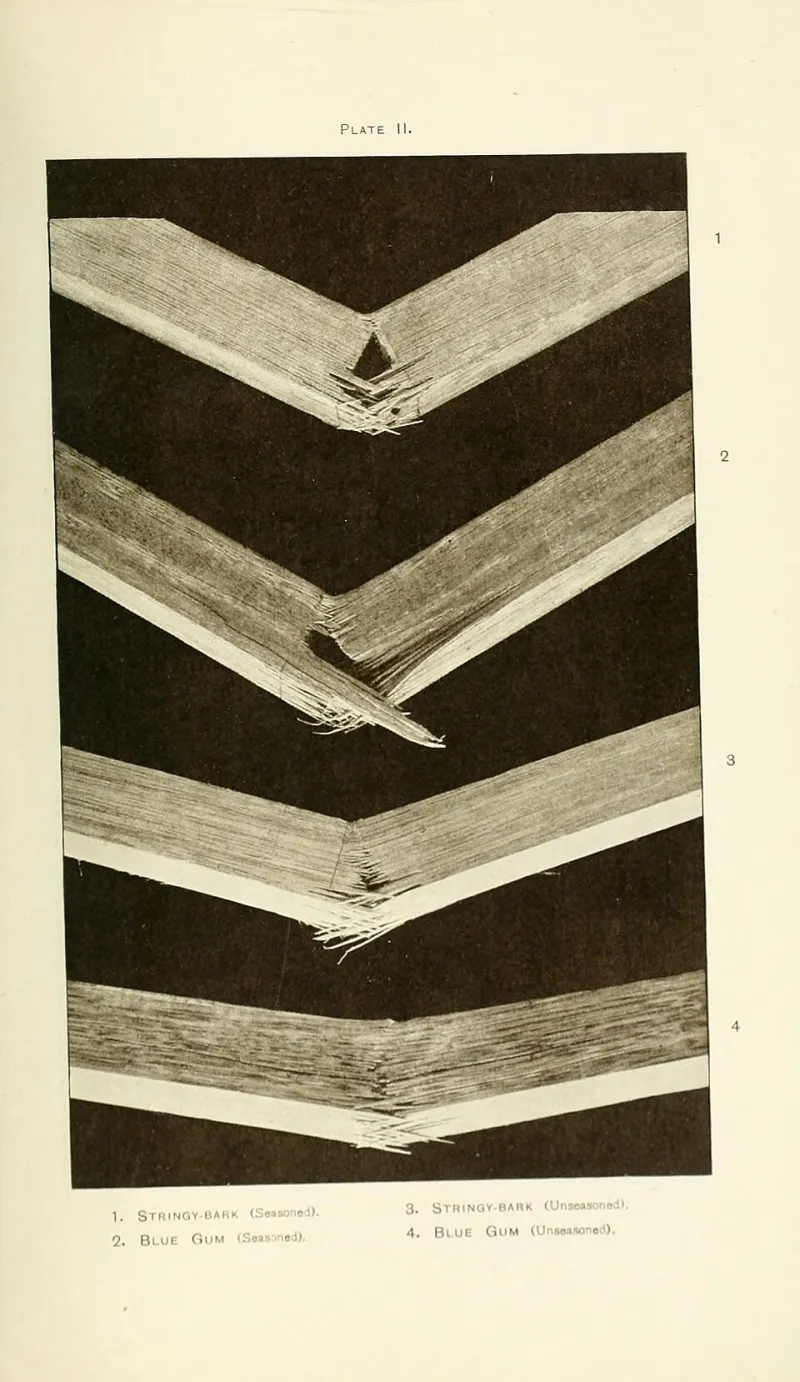
Photo: Internet Archive Book Images, No restrictions, via Wikimedia Commons
Ask three joiners which timber they'd reach for on a set of alcove shelves and you'll get three answers, two of them delivered with a slightly raised eyebrow. Timber choice is one of those subjects that gets talked about as though there's a correct answer sitting in a drawer somewhere. There isn't. There's the room, the finish, the budget and the way your house behaves through a wet January and a dry June. Get those four lined up and the board almost picks itself.
Start with the room, not the timber yard
Before anyone names a species in our workshop, we ask what the piece is for. A painted larder unit in a steamy kitchen, a waxed oak window seat in a draughty hallway, and a lacquered media wall in a new-build living room are three completely different problems. One needs stability under paint. One needs to look good with nothing on it. The third needs to survive a house that's still drying out.
That's the first honest thing to say about timber: the expensive option is only the right option if it's also the appropriate one. We've seen beautiful oak fitted into a spot where the client would have been happier — and several hundred pounds better off — with painted tulipwood.
Oak: character, and a bit of attitude
European oak is the one most people come to us already asking for, and you can see why. Open grain, warm honey-to-biscuit tones, a bit of medullary ray figure if you get a good board. Left oiled or lightly lacquered, it looks like something that belongs in a house rather than a showroom.
It also has opinions. Oak moves more than people expect as it takes on and gives off moisture, so wide solid panels need room to breathe — frames, breadboard ends, or a engineered construction rather than one big glued-up slab. It's heavy. It's hard on tooling. And the tannins in oak react with bare steel, which is why you'll see dark staining around cheap fixings if nobody's thought about it; we use stainless or coated screws as standard.
Cost-wise, oak sits at the top of the three timbers here. Worth it for exposed work — shelving, mantels, window seats, anything you'll touch and look at daily. Harder to justify when it's about to disappear under two coats of eggshell.
Ash: the painted cabinet's best friend
Ash is the timber we suggest most often when someone wants painted furniture that feels properly made. It's pale, straight-grained, hard-wearing and takes paint beautifully — the grain reads through a finish without fighting it. It's also grown in decent quantity closer to home than oak often is, which some clients care about and we're happy to talk through.
It's springy and shock-resistant, which makes it a sensible pick for anything with moving parts: drawer boxes, sliding mechanisms, internal frames. The one caveat is that ash's open grain means it soaks up finish, so a sprayed lacquer or a properly primed paint system matters more than it does on a tighter-grained wood.
Price sits comfortably between oak and tulipwood. If a client wants a visible timber frame but oak is stretching the budget, ash with a clear finish is a conversation worth having.
Tulipwood: the quiet workhorse
American tulipwood — often still called poplar by older joiners — does an enormous amount of unglamorous work in British homes. Tight, even grain, very stable, machines cleanly, and it holds a painted finish without telegraphing every knot and pore.
It's soft. Drop a heavy pan on a tulipwood drawer front and you'll know about it. So it's not the one for a hard-use kitchen island top or a floor-level shoe bench in a busy hall. But for wardrobes, alcove cabinetry, bedroom furniture and anything destined for a sprayed finish, it's hard to beat on value.
It's also the cheapest of the three, which matters on larger runs of fitted furniture where the frame is never going to be seen.
What paint, oil and lacquer actually do
Finish changes the timber argument more than most people realise.
- Paint hides grain, so paying oak prices for painted work is usually money spent on something nobody will see. Tulipwood or a good moisture-resistant MDF with tulipwood edging will do the job.
- Oil (hardwax or Danish-style) sinks in and leaves the grain open to the touch. Brilliant on oak, lovely on ash, and it wants re-doing every year or two in high-traffic spots.
- Lacquer, sprayed, gives a smooth protective film. It suits ash and tulipwood best and stands up well to kitchen grease and children.
- Wax is for period-feel pieces — beautiful, but it needs feeding and it marks if a mug goes down hot.
We'll always tell a client what a finish needs from them after handover. A finish that isn't maintained isn't really a finish.
Old houses, new builds, and the humidity question
This is the bit that catches people out.
Period properties — Victorian terraces, 1930s semis, stone cottages — tend to have solid walls, suspended floors that have had a century to settle, and rooms that run cool and slightly damp in winter. Timber going into those spaces needs to be acclimatised in the room itself for a few days before it's cut, and it needs fixing methods that allow a little movement. A snug scribed fit beats a tight, unforgiving one every time.
New builds are the opposite problem in the first year or two. Wet plaster, screed and fresh paint push indoor humidity up, then central heating dries everything out fast. Boards fitted at 18% moisture and then dried to 8% will shrink, and gaps appear. We aim to work with stock at a sensible indoor moisture content, and we'd rather fit slightly later in a new build's life than fight the building.
Kitchens and bathrooms are their own microclimate. Radiators, towel rails, extractor fans and underfloor heating all change how a piece of timber behaves. Anything within a metre of a heat source gets a bit more thought — and a bit more allowance.
So what should you choose?
The honest answer, most weeks: match the timber to the finish and the room, not to the price tag. Exposed and oiled — oak, or ash if you want paler and a touch cheaper. Painted and built-in — tulipwood, happily, all day long. Somewhere in between, ask your joiner what they'd put in their own house. The answer usually tells you a lot.